TV Wall Mounting: Choosing the Right Height and Bracket
Mounting height and bracket type make a bigger difference than most people expect — here's how to get both right the first time.
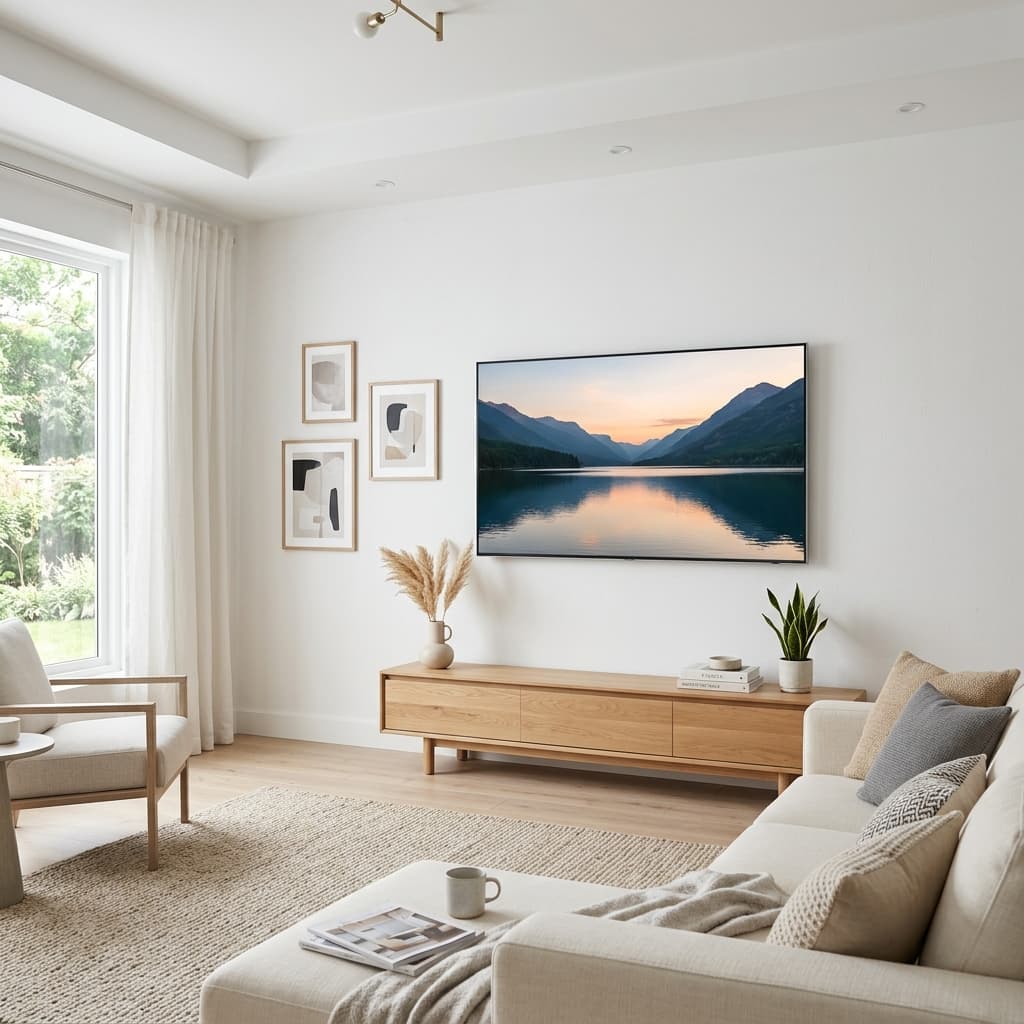
The two most common TV mounting mistakes are mounting too high and choosing the wrong bracket type for the room. Both are easy to avoid once you know what to look for.
Getting the Height Right
The centre of the screen should land roughly at seated eye level from your main viewing spot — for most living rooms, that puts the bottom of the TV around 100-110cm from the floor, not right up near the ceiling.
- Living room, standard sofa — centre of screen at eye level when seated
- Bedroom, viewed from bed — slightly higher is fine
- Above a fireplace — expect to look down slightly; a tilting bracket helps
Choosing a Bracket Type
- **Fixed** — TV sits flush to the wall, no movement. Best when the TV is already at ideal eye level.
- **Tilt** — Angles down slightly, good for above-fireplace installs or high mounting points.
- **Full-motion** — Swings and extends out from the wall. Best for rooms with more than one seating angle, or open-plan living/kitchen spaces.
Wall Type Matters Too
Brick, masonry, plasterboard and stud walls all need different fixings. A bracket rated for the TV's weight is only half the job — it needs to actually be secured into something structural, not just the wall sheet.
Cable Management
In-wall cable concealment (running power and HDMI cables inside the wall cavity) gives the cleanest finish, but needs to be done to electrical safety standards — worth having a licensed installer handle this rather than a surface-mounted cable channel if you want it invisible.